目次
Our Commitment
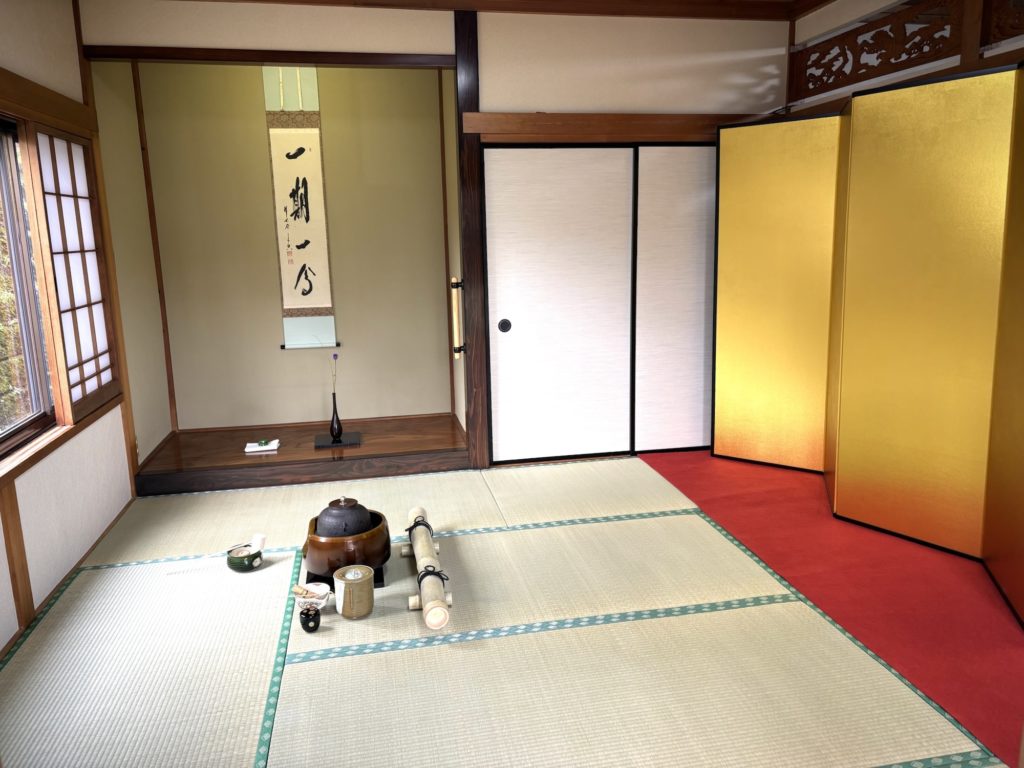
Our venue offers a quiet and serene atmosphere, set apart from the bustle of the city, despite being just a few minutes by car or bus from Toshogu Shrine and within walking distance of the nearest station.

Some of the utensils used in the experience feature designs associated with Toshogu or elements that harmonize with the natural and cultural character of Nikko, creating a setting that naturally connects with the memories of your visit.

After immersing yourself in the nature and history of Nikko, we invite you to unwind through the traditional arts of kimono and tea ceremony, embracing the lingering impressions of your journey.

For those who wish to gently let the inspiration of Toshogu sink into both body and mind, this is a place where you will be warmly welcomed.
Tea Utensils
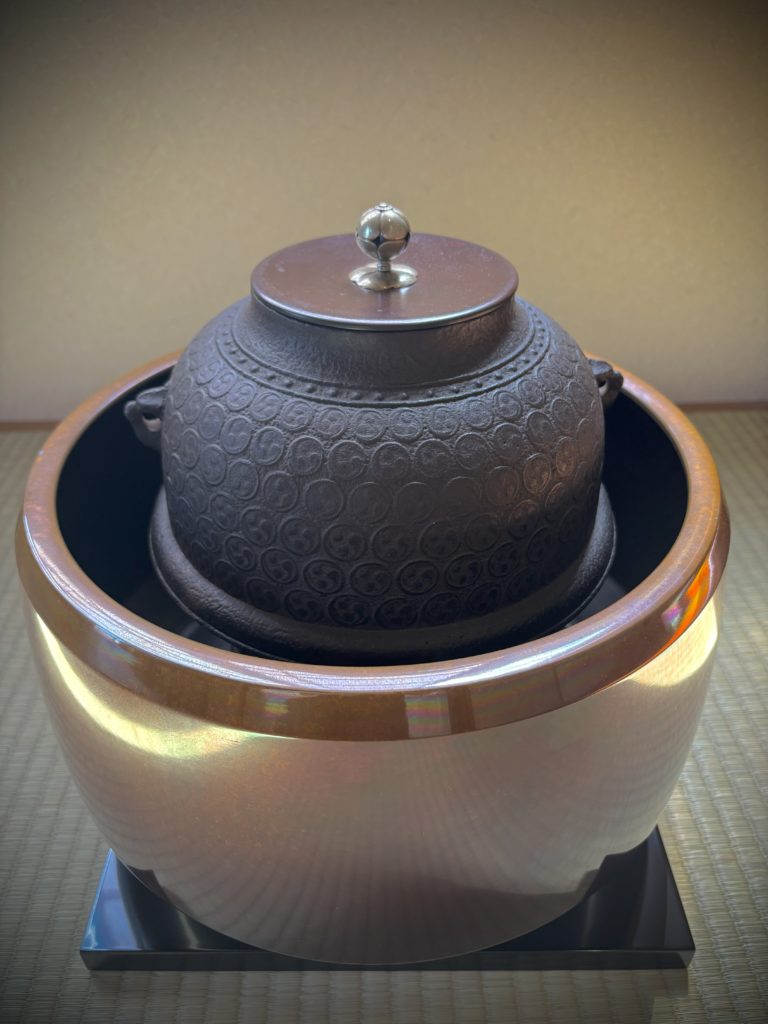
Iron Kettle Adorned with the “Mitsudomoe” Crest

The mitsudomoe motif consists of three swirling shapes, traditionally interpreted as resembling either flickering flames or swirling water. When viewed as fire, it represents a sacred power that wards off misfortune; when seen as water, it symbolizes the force that calms and extinguishes flames. For centuries, people have cherished this emblem as a protective symbol.

The continuous movement of the three interconnected swirls is also said to express “the harmony of heaven, earth, and humankind” as well as the idea of eternal circulation, making it a fitting design for sacred spaces.

In Nikko, the mitsudomoe holds deep cultural significance. It is known as the crest of Futarasan Shrine and also appears in some architectural decorations of Toshogu Shrine, reflecting its strong connection to the region’s spiritual tradition and history.
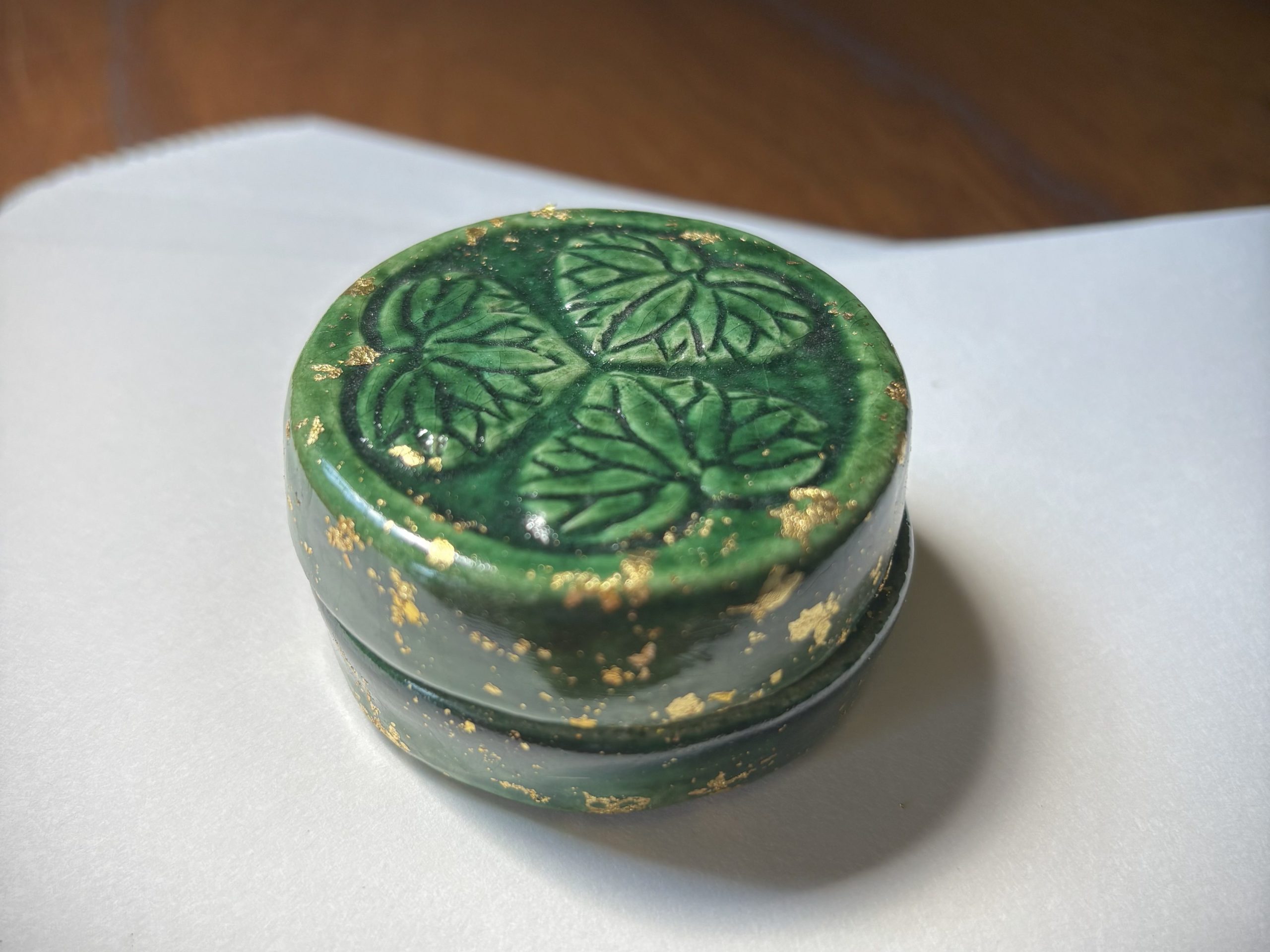
Incense Container with the “Mitsuba Aoi” Crest

The mitsuba aoi—the Triple Hollyhock crest—is widely known as the emblem of the Tokugawa shogunate and can be seen throughout the architecture and ornamentation of Nikko Toshogu Shrine. As a symbol deeply associated with the Tokugawa family, it is one of the motifs that leaves a strong impression on visitors.

This incense container, finished in green glaze with accents of gold leaf, reflects the distinguished aoi crest despite its small size. It brings a sense of refined elegance and quiet splendor to the tea room.

Tea Bowl Featuring the “Three Wise Monkeys”

One of the tea bowls used in our tea room is decorated with the famous Three Wise Monkeys motif from the Sacred Stable of Nikko Toshogu Shrine.
Widely recognized as “see no evil, hear no evil, speak no evil,” this design is one of the most iconic images associated with Toshogu—often the very first scene visitors recall after their visit.

The Three Monkeys, however, represent more than simple cautionary advice.
They are part of a larger series of carvings that depict human life through the metaphor of monkeys, conveying teachings that span the stages of one’s lifetime.
In the panel representing childhood, the gesture of “not seeing, not hearing, and not speaking evil” symbolizes the importance of keeping one’s heart pure.

This deeper meaning makes the tea bowl not only visually appealing but also a quiet reminder of the values cherished within Nikko’s historic spiritual culture.
Authentic Tea Ceremony Led by a Certified Instructor
Both the tea ceremony and kimono dressing are conducted with sincerity by certified practitioners.
Every element you encounter—the movements of the tea ceremony, the kimono you wear, and the traditional tea room in which you spend your time—carries the aesthetic sense and spirit that Japanese people have carefully cultivated over hundreds of years.

At our venue, all experiences are guided by qualified instructors, ensuring that you do not simply follow the form.
We explain the deeper meanings behind each element—why certain gestures exist, why particular flowers are chosen, and the cultural significance behind them. By not only observing but truly understanding as you participate, the essence and quiet beauty of Japanese culture will stay with you in a profound way.

In addition, our staff members hold certifications related to the history and culture of Nikko.
Beyond the tea ceremony, we can also introduce the highlights of the surrounding area, including Nikko Toshogu Shrine.
This allows your entire journey to become richer, more meaningful, and even more memorable.
Experiencing Kimono and Tea Ceremony in One Seamless Flow
Kimono and the tea ceremony are two symbols of Japanese culture.
While there are many places where you can experience each of them separately, it is far less common to find a venue where the moment you slip into a kimono, you can naturally transition into the world of tea without interruption.
This seamless flow is something we value deeply.

At our venue, an authentic tea room is located just beside the space where your kimono dressing is completed.
Moving around in a kimono—especially in a hilly place like Nikko—can be tiring even for Japanese people who are accustomed to it.
By eliminating the need to walk or travel between locations, you are freed from concerns about discomfort, your kimono coming loose, or becoming fatigued.
This allows you to enjoy each gesture of the tea ceremony with a calm body and mind.

As the kimono straightens your posture and aligns your movements, you will find that your mindset naturally follows, making it easier to enter the spirit of the tea ceremony.
This harmony between the two experiences is the unique appeal of enjoying kimono and tea in one continuous flow.

More than simply looking beautiful from the outside, you can savor the quiet sensation of your body and mind settling into balance—slowly, gently, and fully.